
- Home
- Tinted & sun lenses
Find your shade.
From everyday neutrals to a softer hint of colour — a palette to make your lenses your own. Solid tints, gradients that flow, bicolour blends, and polarised lenses for glare-free days.
Tap a colour. See the world through it.
Preview every tint study on a real-world scene. Higher percentages are denser and darker; gradients fade from the top of the lens towards clear at the bottom.
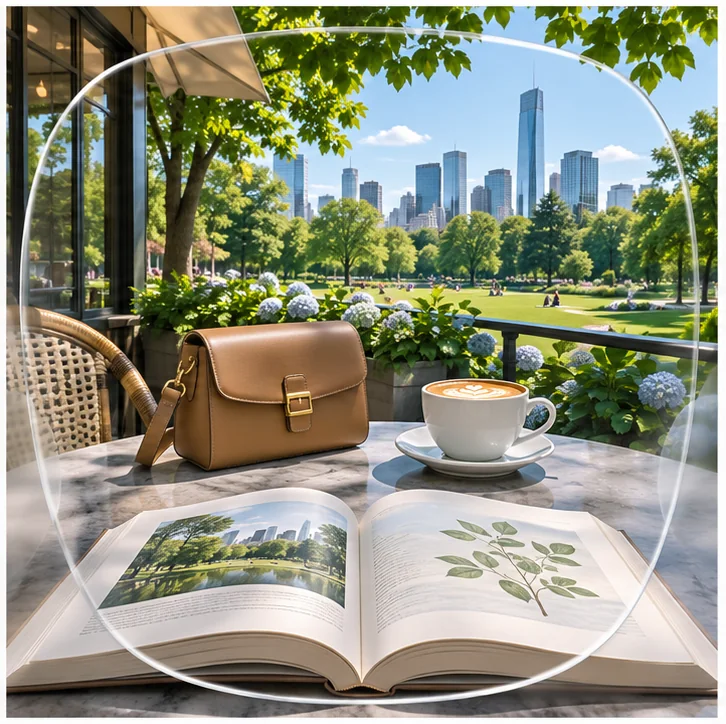
Reference-led colour studies. Names and percentages follow a supplied chart; they are not verified transmission values or confirmed availability. Screen colours vary from the finished lens — match actual lab samples before ordering.
Solid tints · 32 studies
Gradient tints · 10 studies
Bicolour · 4 studies
Solid, gradient or bicolour.
Solid tint
The same colour density across the whole lens. Dense greys, browns, greens and G-15 make classic prescription sunglasses; lighter 10–40% fashion tints add a soft hint of colour for everyday wear.
Gradient tint
A gradual fade from darker at the top to lighter at the bottom — shade from overhead light while keeping the lower part of the lens clearer for reading, dashboards and screens.
Bicolour
Two colours, blended one into the other — a subtle, expressive look. Turkish, Magnolia, Samard/Caramel and Amber bicolour studies.
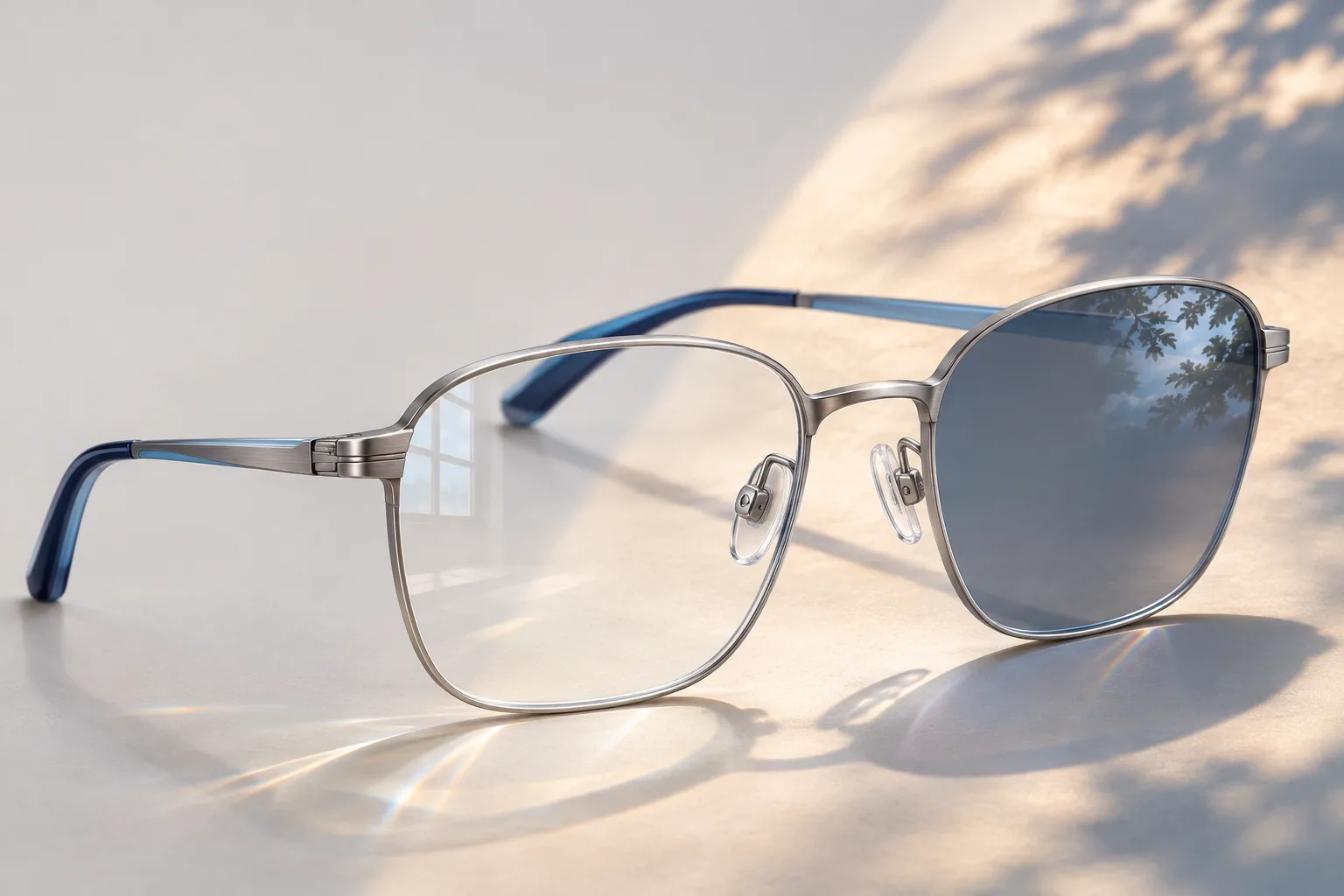
Cut the glare outdoors.
Light reflecting off flat surfaces — roads, water, car bonnets, snow — becomes horizontally polarised and causes dazzling glare. A polarised lens blocks much of that reflected light, so outdoor views look calmer, with richer contrast.
- Ideal for driving & travelLess glare from wet roads and windscreens.
- Great by waterSee past surface reflections.
- An add-on for eligible clear RX lensesAsk your optician which prescriptions and designs qualify.
Which lenses can be tinted or polarised?
| Lens | Fashion tint | Polarised |
|---|---|---|
| Single vision RX — eligible clear lenses | ||
| Progressive Pastel, Vibrant & Extreme — clear | ||
| Single vision finished (stock) | ||
| Progressive Eco | ||
| Bifocal — Kryptok & D |
Bicolour options and special shades are not yet confirmed; availability requires lab confirmation. Colours on screen and in print vary from the finished lens.
Frequently asked questions
What is the difference between a solid, gradient and bicolour tint?
A solid tint has the same colour density across the lens. A gradient tint fades from darker at the top to lighter or clear at the bottom. A bicolour blends two colours, one into the other.
What do the tint percentages mean?
The percentage describes how dense the tint looks — a higher percentage is darker. Percentages in our colour studio follow a reference chart; they are not verified light-transmission values.
Which lenses can be tinted or polarised?
Tint and polarised add-ons apply to eligible clear RX lenses, including clear Pastel, Vibrant and Extreme progressives. Stock single vision lenses, Eco progressives and bifocals are not offered with tint or polarised options.
What does a polarised lens do?
A polarised lens reduces glare reflected from flat surfaces such as roads, water and car bonnets, making outdoor vision more comfortable.
Ask for Optolite by name.
Optolite lenses are supplied through opticians and optical partners. Talk to us about the right lens, or about stocking the collection.