- Home
- Photochromic lenses
Light changes. Your lenses respond.
A light-adaptive lens, explained from the inside out. Clear indoors, an adaptive shade outdoors — one pair for a changing day.
One pair. A changing day.
Drag the slider from indoors to outdoors and watch the lenses respond. In sunlight, the photochromic response creates a darker appearance; as activating exposure reduces, the lens lightens towards its indoor state.
Both lenses of an ordered pair are matched, so they darken and clear together.
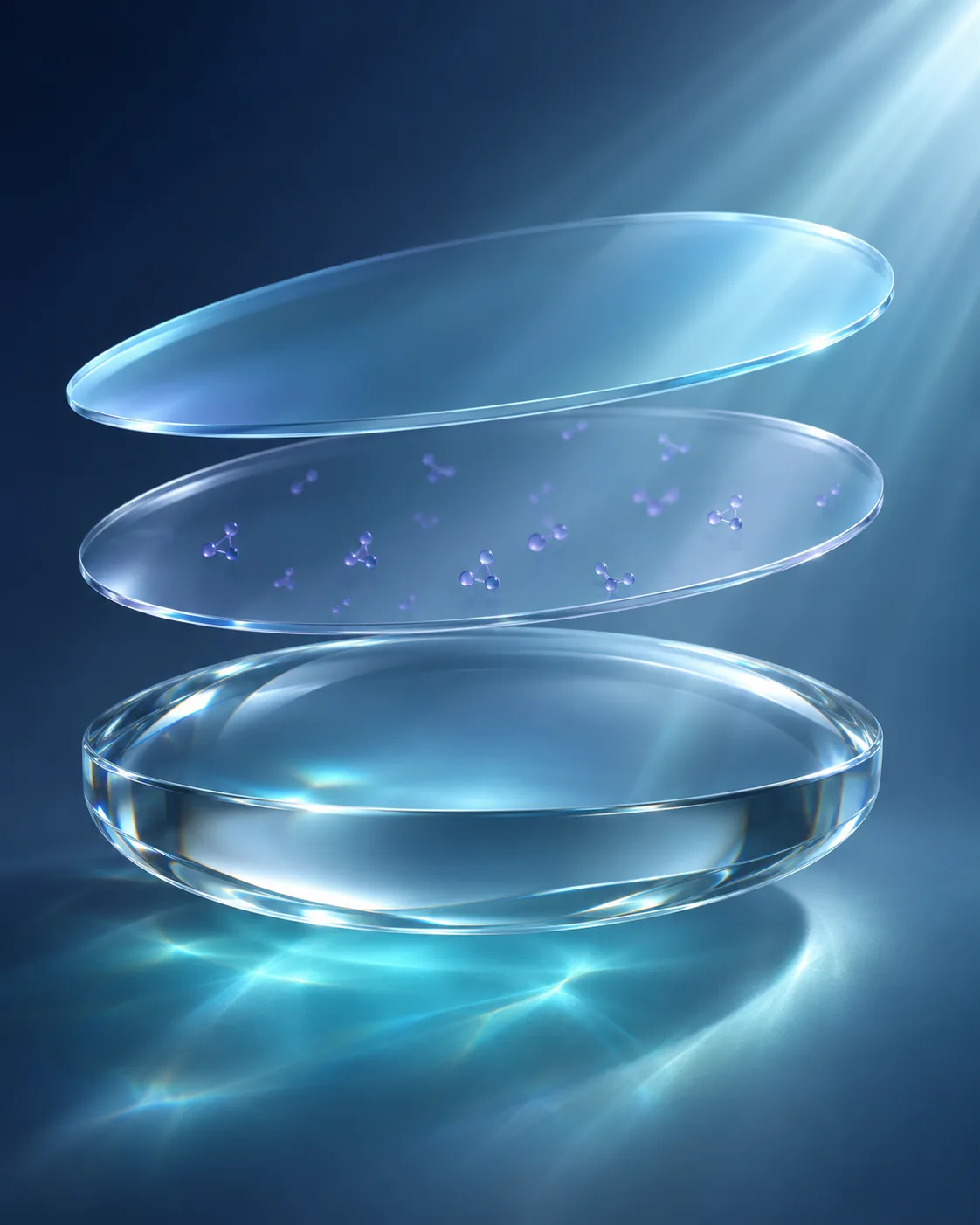
From the inside out.
- 01 · Light-responsive colourPhotochromic materials change their light absorption under suitable light exposure — mainly UV — creating the darker outdoor appearance.
- 02 · Prescription lensYour selected lens design and material provide the prescription correction. Colour response is an additional lens option.
- 03 · Selected surface finishChoose from the listed coating combinations. The finish and the photochromic function serve different purposes.
Conceptual mechanism, not a cutaway of actual layer architecture. No proprietary technology, activation speed, UV percentage or blue-light filtration performance is claimed.
A shade for every light.
A clear-to-dark colour journey, visualised for every shade in the current collection concept.
Colours and activation stages are illustrative — not timed performance or measured transmission. The photochromic colour portfolio and material availability are to be confirmed with the lab.
What changes the response.
UV exposure
Photochromic lenses respond mainly to UV in daylight. Brighter, clearer days generally mean a darker shade — even on cloudy days there can be a response.
Temperature
In heat, lenses may get slightly less dark; in the cold they can darken more and fade back a little more slowly.
Inside the car
Activation through a windscreen can be limited, because most windscreens block much of the UV that triggers the change.
Which lenses can be photochromic?
Confirm your design, index, coating and shade together — photochromic is offered only in the combinations listed.
| Index | Hard Coat | Clear AR | Blue Shield | Premium SHMC |
|---|---|---|---|---|
| 1.50 CR-39 | ||||
| 1.59 Polycarbonate | ||||
| 1.60 High index | ||||
| 1.67 High index | ||||
| 1.74 Ultra-thin |
| Index | Hard Coat | Clear AR | Blue Shield | Premium SHMC |
|---|---|---|---|---|
| 1.50 CR-39 | ||||
| 1.59 Polycarbonate | ||||
| 1.60 High index | ||||
| 1.67 High index | ||||
| 1.74 Ultra-thin |
| Index | Hard Coat | Clear AR | Blue Shield | Premium SHMC |
|---|---|---|---|---|
| 1.50 CR-39 | ||||
| 1.59 Polycarbonate | ||||
| 1.60 High index | ||||
| 1.67 High index | ||||
| 1.74 Ultra-thin |
| Index | Hard Coat | Clear AR | Blue Shield | Premium SHMC |
|---|---|---|---|---|
| Kryptok 1.50 | ||||
| Kryptok 1.59 | ||||
| D Bifocal 1.50 | Not offered | |||
Photochromic is not offered on single vision stock lenses or the Eco progressive.
Frequently asked questions
How do photochromic lenses work?
Photochromic materials change how much light they absorb when exposed to suitable light, mainly UV. Outdoors the lens darkens to an adaptive shade; indoors, as exposure reduces, it fades back towards clear.
Do photochromic lenses darken in the car?
Often only a little. Most windscreens block much of the UV that activates photochromic lenses, so darkening behind a windscreen can be limited.
Does temperature affect photochromic lenses?
Yes. UV exposure, temperature and lens material all affect how dark lenses become and how quickly they fade back. In hot weather they may get slightly less dark.
Which Optolite lenses are available in photochromic?
Pastel, Vibrant and Extreme progressives and Kryptok bifocals in listed combinations. Your optician will confirm the exact index, coating and shade combination.
Ask for Optolite by name.
Optolite lenses are supplied through opticians and optical partners. Talk to us about the right lens, or about stocking the collection.