- Home
- Progressive lenses
One lens. Three distances.
A gradual change in power lets you look far ahead, work at arm’s length and read up close — all without a visible dividing line. Four designs, from a straightforward entry to our flagship.
How you see through a progressive lens
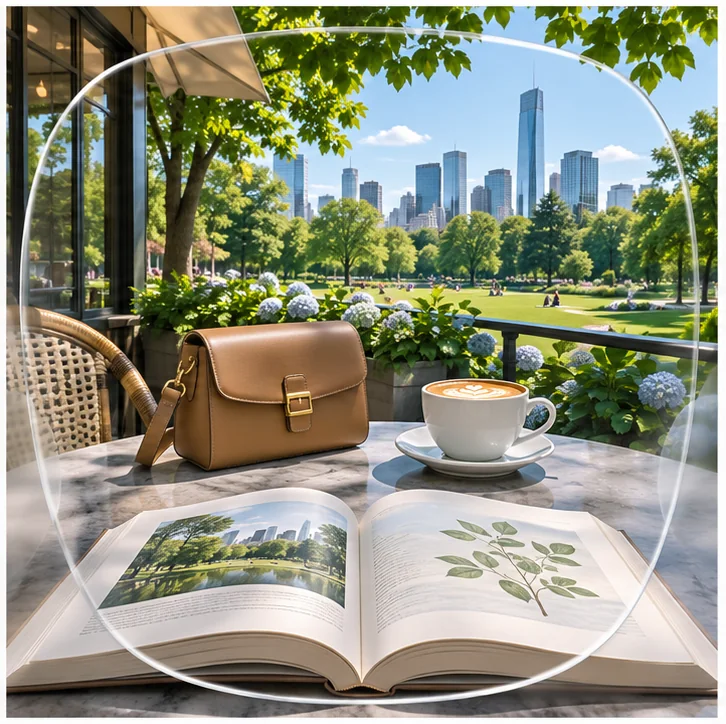
Look far.
Distance vision through the upper zone. The skyline, the road, a face across the room — sharp when you look straight ahead.
Stay connected.
A corridor for arm’s-length tasks. Your laptop, the dashboard, the shelf in a shop — the power increases smoothly as your eyes lower.
Come closer.
A dedicated area for reading and near work. Books, messages and menus, by simply lowering your gaze.
A gradual change in power.
Your distance prescription sits at the top of the lens. Moving down a narrow corridor, extra plus power is added a little at a time until it reaches your full reading addition — the ADD — in the near zone.
As we get older, the eye’s natural lens gradually loses its ability to change focus (presbyopia). That is why most people need help with reading from their 40s. A higher ADD is needed as this progresses, which makes the corridor work harder. Move the slider to see how the design changes as the ADD increases.
Every progressive has peripheral blending zones on either side of the corridor. Accurate fitting and a short period of adaptation matter. Illustrations are conceptual, not measured optical maps.
Compared with the alternatives.
| Single vision | Bifocal | Progressive | |
|---|---|---|---|
| Distances | One — distance or near | Two — distance and near | Three — distance, intermediate and near |
| Visible line | No | Yes, a visible segment | No dividing line |
| Screens at arm’s length | Needs a separate pair | No dedicated zone | Continuous intermediate corridor |
| Adaptation | Minimal | Short — learn the segment | A few days to a couple of weeks |
Four designs. A clearer way to choose.
Compare the viewing concept, then select your material and finish. All designs include distance, intermediate and near zones, and continuous power with no visible bifocal line.
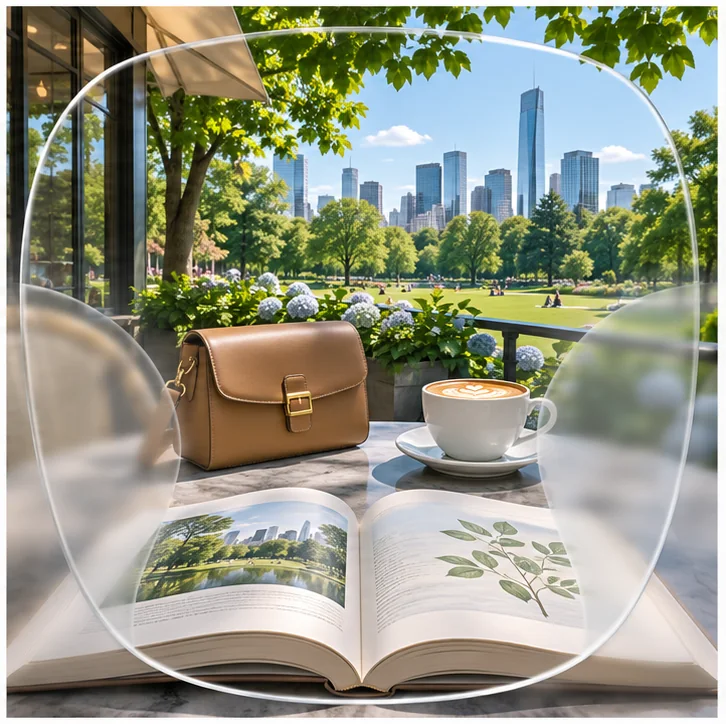
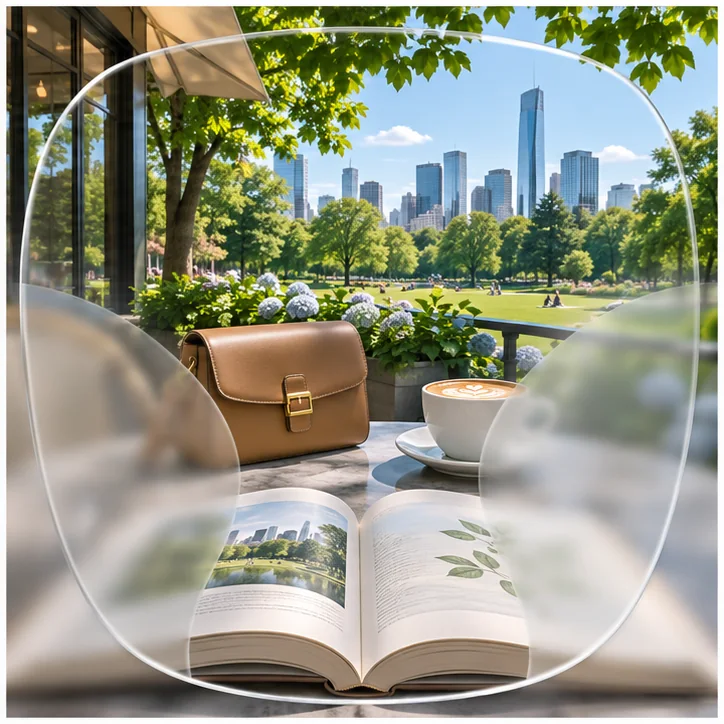
Optolite Extreme — the hero of the collection
Our flagship tier, designed with greater emphasis on the intermediate and near viewing areas and the most open viewing-zone concept in the portfolio. A more considered lens choice for wearers who want the broadest perspective. Clear or photochromic, 1.50 to 1.74.
Optolite Vibrant — advanced
An intermediate- and near-focused step within the collection. Explore it with your optician considering your screen distance, reading habits and frame choice. Clear or photochromic, 1.50 to 1.74.
Optolite Pastel — balanced
Start with distance and reading in one pair, connected by an intermediate corridor. A balanced introduction to distance, intermediate and near for everyday life. Clear or photochromic, 1.50 to 1.74.
Optolite Eco — entry
A straightforward entry into the progressive collection, in 1.50 clear with a choice of all four finishes. No photochromic, tint or polarised options on Eco.
Material & finish, by design.
Pastel, Vibrant and Extreme are offered from 1.50 to 1.74, in clear and photochromic. No 1.56 progressive is listed.
| Index | Hard Coat | Clear AR | Blue Shield | Premium SHMC |
|---|---|---|---|---|
| 1.50 CR-39 | ||||
| 1.59 Polycarbonate | ||||
| 1.60 High index | ||||
| 1.67 High index | ||||
| 1.74 Ultra-thin |
| Index | Hard Coat | Clear AR | Blue Shield | Premium SHMC |
|---|---|---|---|---|
| 1.50 CR-39 | ||||
| 1.59 Polycarbonate | ||||
| 1.60 High index | ||||
| 1.67 High index | ||||
| 1.74 Ultra-thin |
| Index | Hard Coat | Clear AR | Blue Shield | Premium SHMC |
|---|---|---|---|---|
| 1.50 CR-39 | ||||
| 1.59 Polycarbonate | ||||
| 1.60 High index | ||||
| 1.67 High index | ||||
| 1.74 Ultra-thin |
| Index | Hard Coat | Clear AR | Blue Shield | Premium SHMC |
|---|---|---|---|---|
| 1.50 CR-39 | ||||
| 1.59 Polycarbonate | ||||
| 1.60 High index | ||||
| 1.67 High index | ||||
| 1.74 Ultra-thin |
| Index | Hard Coat | Clear AR | Blue Shield | Premium SHMC |
|---|---|---|---|---|
| 1.50 CR-39 | ||||
| 1.59 Polycarbonate | ||||
| 1.60 High index | ||||
| 1.67 High index | ||||
| 1.74 Ultra-thin |
| Index | Hard Coat | Clear AR | Blue Shield | Premium SHMC |
|---|---|---|---|---|
| 1.50 CR-39 | ||||
| 1.59 Polycarbonate | ||||
| 1.60 High index | ||||
| 1.67 High index | ||||
| 1.74 Ultra-thin |
| Index | Hard Coat | Clear AR | Blue Shield | Premium SHMC |
|---|---|---|---|---|
| 1.50 CR-39 |
Eco is clear only
No photochromic, tint or polarised options are offered on Eco. For light-adaptive or tinted progressives, choose Pastel, Vibrant or Extreme.
Eligible clear Pastel, Vibrant and Extreme lenses can take a fashion tint or polarised add-on. A Pastel 1.56 solid-tint exception appears in the source workbook and must be confirmed before ordering.
Planned power range
Applies across the progressive collection.
Proposed ranges for lab review — indicative planning ranges, not confirmed manufacturing limits. Final availability depends on design, index, combined powers and diameter.
Five tips for a smooth start.
Wear them all day
Consistent wear helps your eyes and brain learn the zones quickly. Avoid switching back and forth with old glasses.
Point your nose
Turn your head towards what you want to see, rather than just your eyes, to stay in the clearest areas.
Lower your eyes to read
Keep your head comfortable and drop your gaze into the near zone for books and phones.
Take stairs carefully
At first, tilt your head down slightly on stairs so you look through the distance area.
Trust the fitting
Accurate measurements by your optician — pupil distance and fitting height — are key to great progressive vision.
Make it photochromic
Pastel, Vibrant and Extreme adapt from clear indoors to a shade outdoors.
See howFrequently asked questions
What is a progressive lens?
A progressive lens changes power gradually from the top to the bottom of the lens. You look through the upper area for distance, a central corridor for arm’s-length tasks like computers, and the lower area for reading — with no visible dividing line.
What is the difference between Eco, Pastel, Vibrant and Extreme?
Eco is a straightforward entry design in 1.50 clear. Pastel is a balanced design for everyday distances. Vibrant is an advanced tier with a focus on intermediate and near tasks. Extreme is the flagship with the most open viewing-zone concept in the collection. All include distance, intermediate and near zones.
How long does it take to adapt to progressive lenses?
Many wearers adapt within a few days to a couple of weeks. Wear them consistently, point your nose towards what you want to see, and lower your eyes (not your head) to read. Accurate fitting by your optician makes a big difference.
Why are the edges of a progressive lens slightly blurred?
Every progressive lens has peripheral blending zones where the power transitions. More advanced designs aim to make these zones less noticeable. Turning your head slightly towards the object brings it into the clearer zones.
Are Optolite progressive lenses available in photochromic?
Yes. Pastel, Vibrant and Extreme are offered in clear and photochromic. Eco is clear only.
Ask for Optolite by name.
Optolite lenses are supplied through opticians and optical partners. Talk to us about the right lens, or about stocking the collection.